The “AI Gold Rush“ refers to the current period where companies are rapidly adopting technologies, especially artificial intelligence technologies, at an unprecedented pace, driven by intense competition and the pursuit of significant competitive advantages.
Successful implementation hinges not only on process redesign but also on critical organizational enablers: ensuring high-quality data and defining clear, relevant KPIs. The future points towards more automated, strategically managed, ethically grounded, and adaptive AI portfolio governance, particularly as generative and agentic AI introduce further complexities and capabilities. Organizations that proactively adopt these adapted, governed, and agile approaches will be best positioned to harness AI’s potential responsibly and effectively.
The rapid proliferation of Artificial Intelligence (AI) presents both unprecedented opportunities and unique challenges for enterprise innovation. Customers adopt AI to improve customer engagement, personalization, and automation.
Approaching initiatives as a portfolio helps maximize value and drive continuous improvement and growth, but failing to adapt quickly enough presents challenges and incurs the opportunity cost of missing the wave.
- Miss new opportunities or emerging market trends
- Make costly engineering mistakes by creating products that nobody will use
- Create technical debt by supporting features that customers aren’t using
- Respond to problems too late
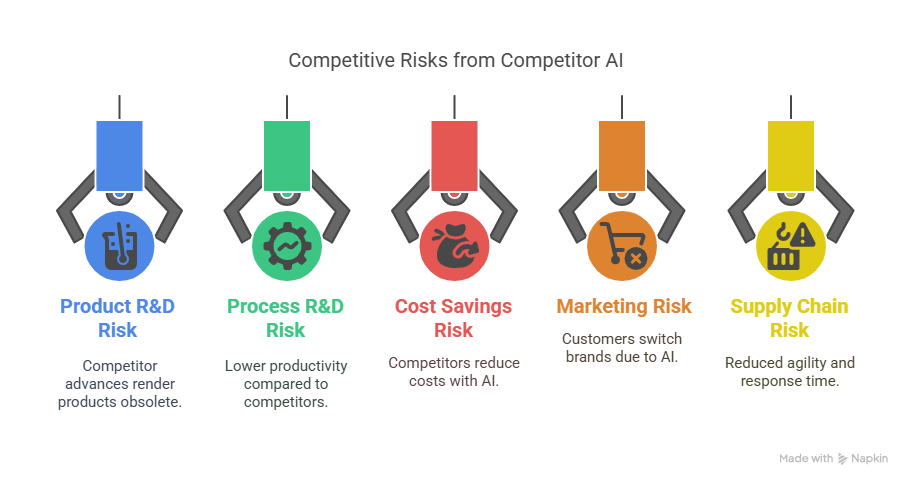
When competitors adopt and embed new tech into their operations, they stand to improve R&D and processes, leading to cost savings and agility; this enhanced competitiveness creates a risk that customers may switch brands.
Thoughtful execution:
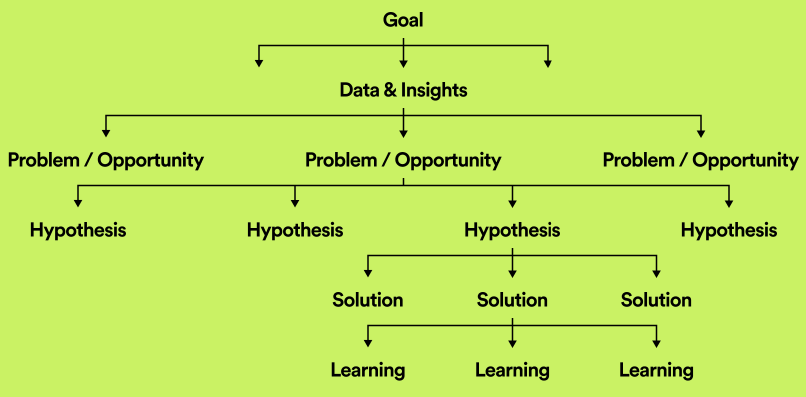
Given AI’s transformative capabilities, which necessitate rethinking traditional approaches, it’s advisable to adopt a discovery-driven strategy; Teresa Torres details such an approach in her book Continuous Discovery Habits, a methodology successfully used by Spotify and many other companies.
- Set a Goal: Example ‘Increase consumption of personal content recommendation for new users’
- Data & Insights: Examples ‘’90 % of the new users are churning in the first week,’ as it takes too long for the personalized recommendation to be served.
- Problem & Opportunity: HMW capture the needs, intent of the new user efficiently?
- Hypothesis: Do a Crazy 8 Exercise, come up with ideas, and experiment to test them
- Design Solutions: POC is to test technologies, and MVP is for experimenting with ideas.
- Learnings: Capture and communicate for impact!
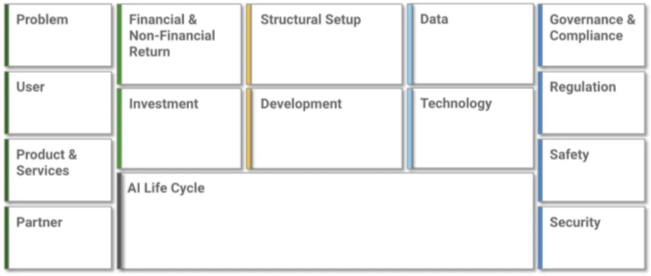
Adopt AI Canvas: A strategic toolkit for your AI initiatives:
As a holistic tool, the AI Canvas offers clear guardrails and steps that lead to success in the implementation and scaling of AI projects. AI Canvas helps teams to think through all the aspects of Business, Organization, technology & AI lifecycle. Further read Merantix research & thought leadership, white paper.
Portfolio management reviews with stage gate:
Define the vision, value, methods, objectives, and measures of V2MOM and prioritize based on Business value. technical feasibility and Potential of the use-case.
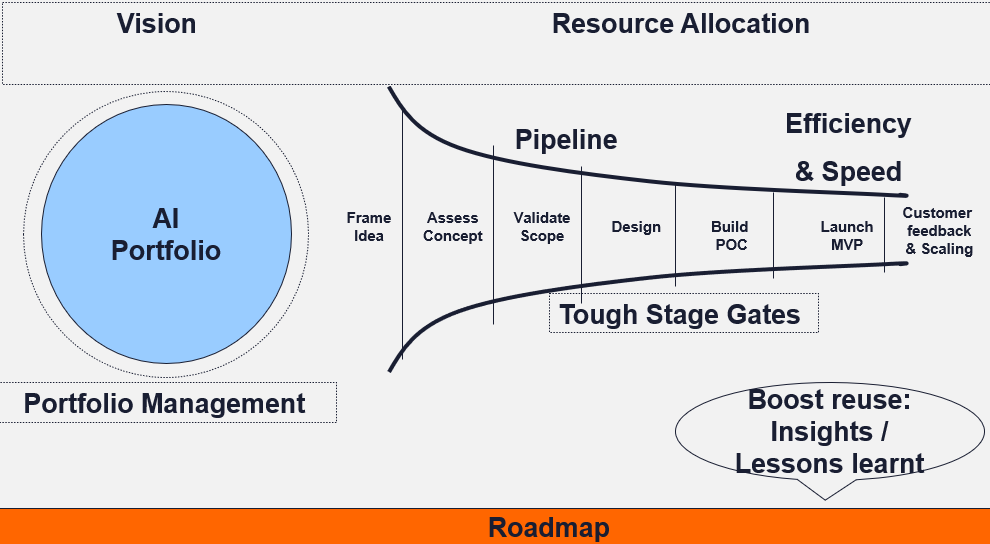
- Discover: Pre-work designed to discover and uncover business opportunities and generate new ideas, aligned with the company vision
- Stage 1 – Frame idea: Create a pitch to inspire, to solve the problem or opportunity, using the HMW questions to maximize ideas.
- Stage 2 – Assess concept: Quick, inexpensive preliminary investigation and scoping of the project. It is largely desk research.
- Stage 3 – Validate scope: Detailed investigation involving primary research (customer, market, and technical) leading to a Business Case
- Stage 4 – Design: The actual detailed design and development of the new product
- Stage 5 – Build POC: Experiment exhaustively to verify and validate the proposed new product, brand/marketing,g and production or operations plans
- Stage 6 – Launch: Commercialization: the beginning of full-scale operations or production, marketing, and sales.
Note: Design for Cognitive tasks and not for AI!
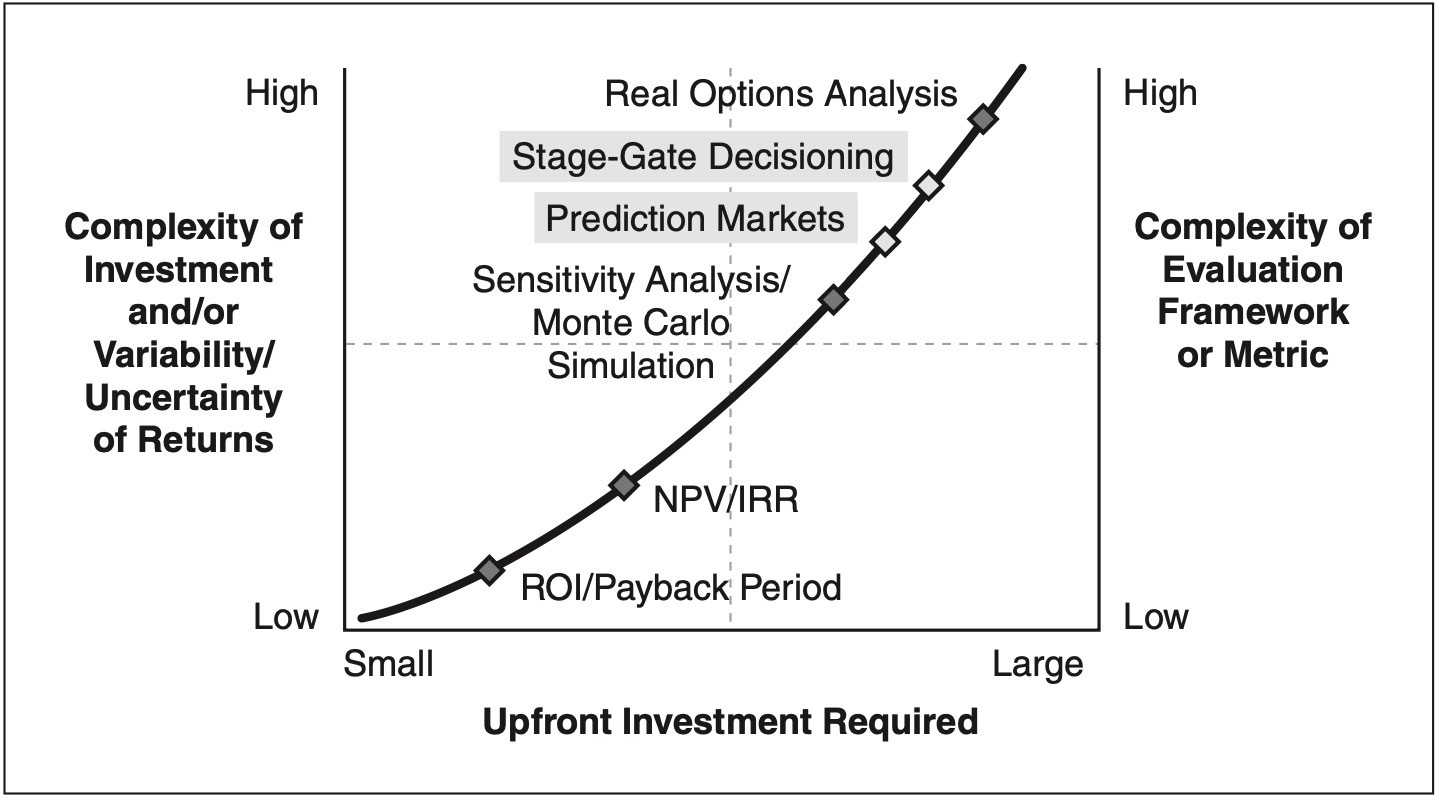
High Uncertainty: Requirements and outcomes evolve through experimentation. The reason for adopting this method is from Portfolio management principles, as the complexity of activities and Complexity of evaluation increases, decisions need to be taken up as Stage-gate!
#AI #ArtificialIntelligence #ProjectManagement #PortfolioManagement #StageGate #Agile #AIGovernance #ResponsibleAI #Innovation #DigitalTransformation #RiskManagement #MachineLearning #GenerativeAI #AIStrategy #persolization #aicanvas #thoughfulexecution
References:
- Reforge articles – AI Product management blogs
- Merantix https://en.merantix-momentum.com/
- Portfolio management concepts from Sorin Dumitrascu
- Spotify’s thoughtful execution method.
- Terrasa Torres – https://www.producttalk.org/
- OCEG AI Governance https://www.oceg.org/
- Art of product AI development & AI for Business https://jannalipenkova.substack.com/

Leave a Reply
Your email is safe with us.